January 6
Your annual reminder that Donald Trump is a disgrace, whether most people think so or not.

Four years ago we experienced the epitome of putting a man who didn’t care about our democratic institutions in our highest office. Fueled by lies from then-President Trump, a violent mob stormed the Capitol as Representatives and Senators were going about the previously-routine process of certifying Biden’s election win (and Trump’s loss). This happened because Trump lied continuously about the results of the election. It was not only foreseeable, but what Trump wanted.
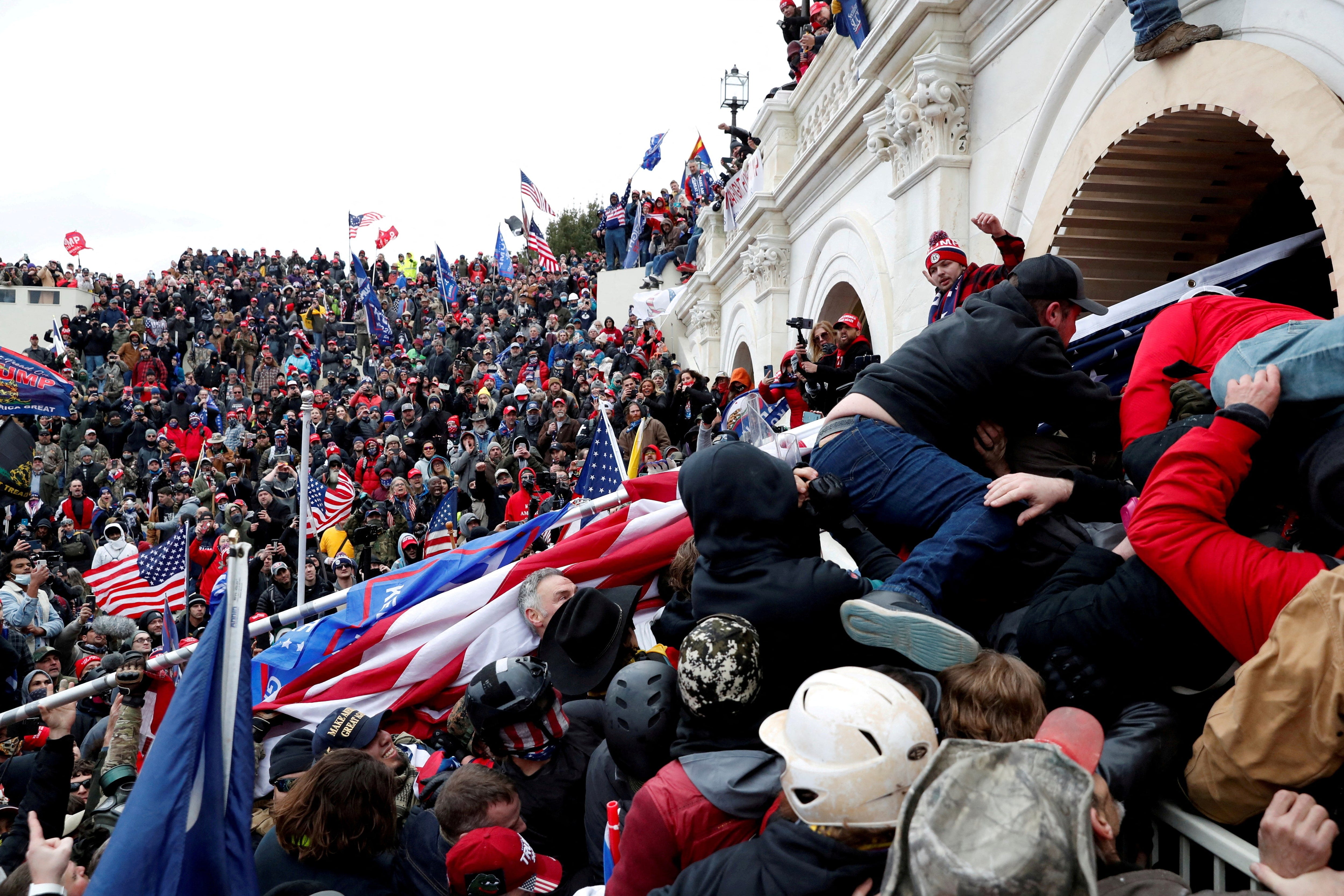
Matthew Yglesias has a piece today that says that he can forgive principled conservatives making a judgment that Trump’s positions on taxes, trade, abortion, whatever overwhelm whatever personal qualms they might have about his election denialism, he just wishes that those people would continue to acknowledge that Trump’s conduct on this count was execrable, which they did in early 2021, but do not seem to do anymore.
But this is wrong.1 If you voted for Trump, you voted for someone who doesn’t care about democracy at all. He showed this when he refused to concede an election he very clearly lost. This means you don’t care about democracy either. You care about your policy priorities—whatever they may be—more than the American republic, because you’re willing to sacrifice the permanent sanctity of the latter for the temporary advancement of the former.
When I took philosophy 101 a million years ago, we learned about St. Anslem’s argument for the existence of G-d. Basically, St. Anslem defines G-d as a “being than which no greater can be conceived," and argues that such a being must exist in the mind of even a person who denies G-d exists in reality. But this person would be wrong, says St. Anslem: if G-d existed only in one’s mind, then an even greater being must be possible—one who exists both in mind and in reality, because existing in reality is greater than existing in the mind alone. Therefore, the greatest possible being—G-d—must exist in reality as well as the mind.
Immanuel Kant, among others, rightly disproved this argument by noting that existence is a predicate, from which other attributes flow. That is, if something does not “exist” to begin with, it cannot be said to have any other attributes. One cannot say something is “made better” by existing. Rather, it needs to exist to have any other attributes at all.
Belief in democracy is a predicate for any other policy goal. If you don’t support our Constitution and our system of government and won’t disavow a candidate who doesn’t, your policy stances (whether I agree with them or not) mean nothing to me. You’re Franco, happy to participate in the electoral system when it benefits you, and to use lies and violence when it does not.
Trump didn’t care about democracy. He won this time, fair and square, but that doesn’t mean his candidacy was anything other than a farce on and a disgrace to the American system. Many Trump voters know this and voted for him anyway.2 I don’t care whether that’s the majority of Americans or not.
They’re wrong. Shame on them.
It’s rare that Matt and I will disagree. The key line in Matt’s piece to me is “but I also respect (or at least understand) the decision of those who’ve decided they care more about other things than about Trump’s low character and basic unfitness for office.” I don’t respect it at all!
Of course, many Trump voters do not understand this, in no small part thanks to the right wing propaganda which has downplayed or washed over his election denialism.
Good article. The outcry of sympathy from his supporters when Trump was grazed in the ear by a bullet far exceeds any sympathy they gave to Capitol police harmed in the violence of January 6th. Their concern for humanity is as conditional as their belief in democracy.